











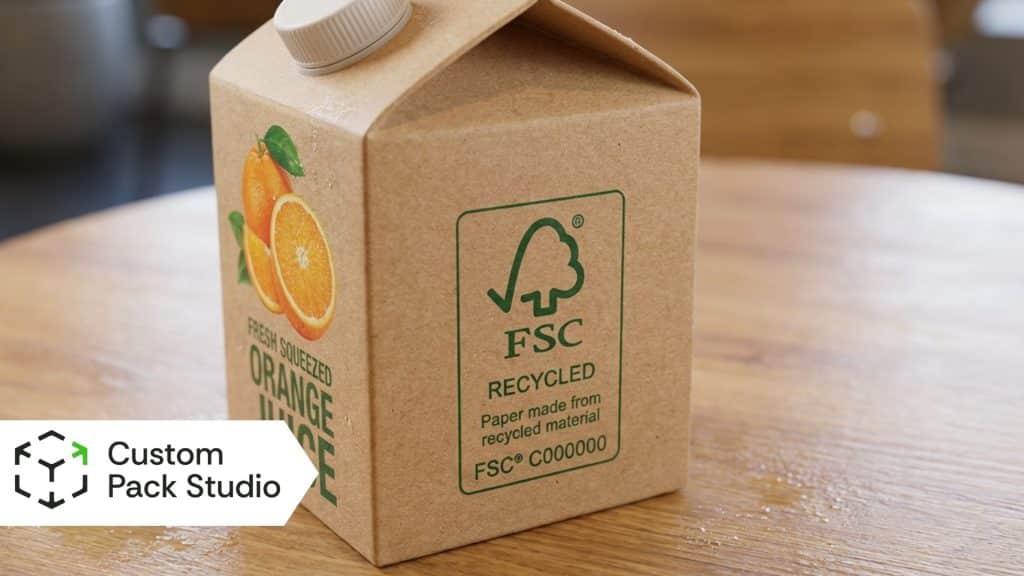
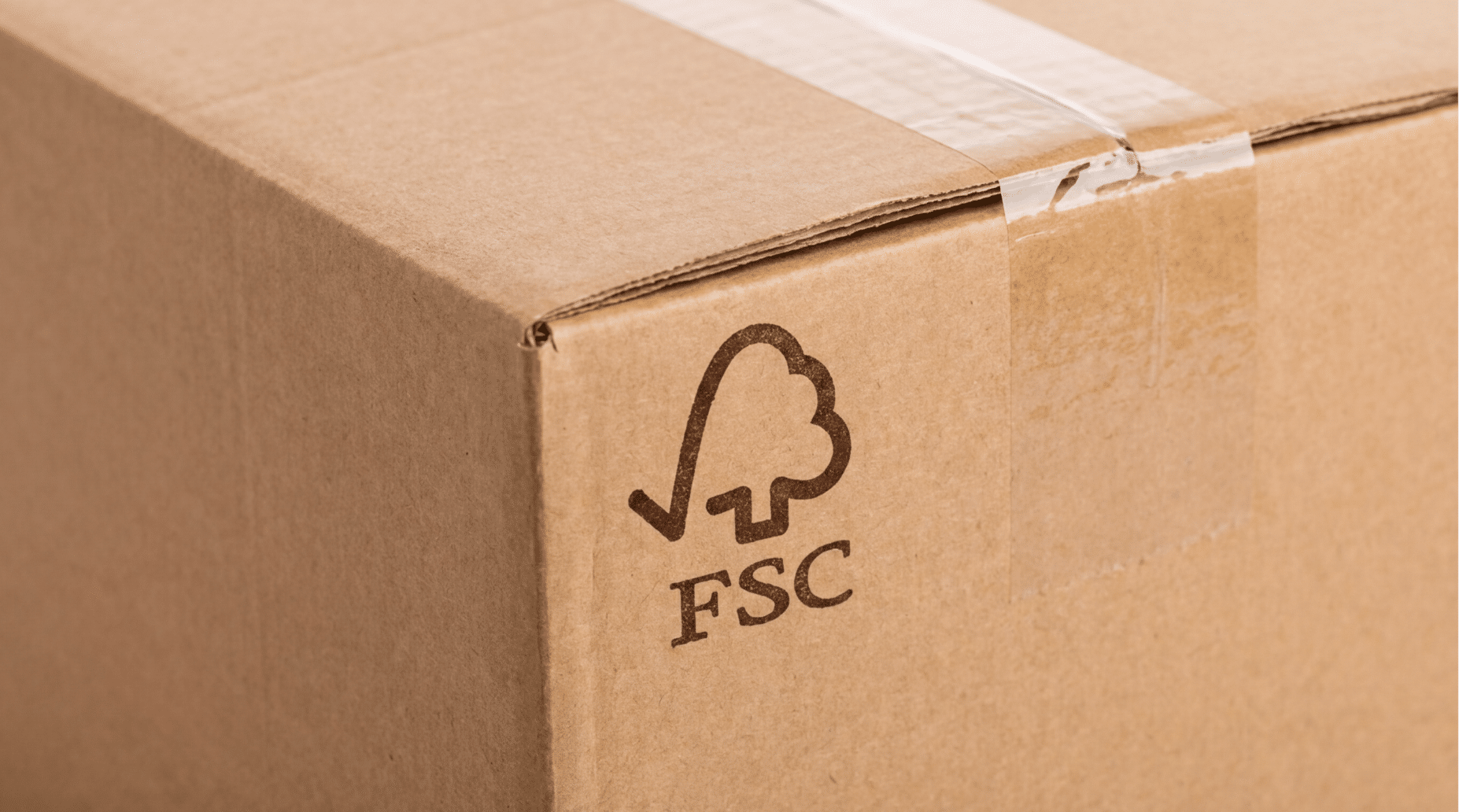
If you have ever flipped a cardboard box over and noticed a small logo of a tree with a tick mark, you have seen the FSC label.
It appears on everything from paper notebooks and cereal boxes to furniture and building materials, and it is one of the most widely recognised certification marks in the world.
But why is it there? And if you are a brand choosing packaging for your product, why should you care whether the box carries an FSC label or not?
This guide explains what FSC is, how the certification works, what the different label types mean, and why it matters for businesses using wood or paper packaging.
What FSC stands for
FSC stands for Forest Stewardship Council® (FSC®).
It is an international non-profit organisation whose mission is to promote environmentally appropriate, socially beneficial, and economically viable management of the world’s forests.
It does this through a timber certification system that lets businesses and consumers identify forest products made from responsibly sourced wood and paper.
FSC was founded in 1994, to protect against deforestation, illegal logging, and the destruction of old-growth forest.
The idea was straightforward.
If consumers could identify wood products from well-managed forests, they would choose those over alternatives from unacceptable sources. That market access advantage would give forest owners an economic benefit for responsible management of forests, rather than punishing them for it.
Today, over 150 million hectares of forests are managed according to FSC standards. And the tree-and-tick logo is recognised by over two-thirds of the UK population alone.
How the FSC certification system works
FSC does not manage forests itself.
Instead, it sets the standards of responsible forest management. Then independent, accredited certification bodies carry out audits which verify whether responsible management practices is happening on the ground.
There are two types of FSC certification, and they work together to encourage responsible forestry.
Forest Management certification
This is the certification given to the forest itself.
A forest owner or manager applies to be assessed against FSC’s 10 Principles and Criteria, which cover biodiversity protection, indigenous peoples’ rights, water quality, soil health, and long-term management planning.
An independent auditor visits the forest, reviews management plans and records, interviews workers and local people, and checks that the operation meets FSC’s environmental and social standards on the ground.
The assessment looks at whether the forest can regenerate after harvest and whether the operation delivers economic viability for local communities alongside conservation.
If it passes, the forest receives FSC Forest Management certification, and the timber it produces can enter the FSC supply chain.
FSC Chain of Custody certification
Forest Management certification covers the forest. But the FSC chain of custody system covers everything that happens after the timber leaves the forest gate.
Every company that handles, processes, or trades FSC-certified material on its way to becoming a finished product needs its own Chain of Custody certificate.
That means the sawmill, the paper mill, the board manufacturer, and the packaging producer all need to hold FSC Chain of Custody certification.
At each stage, they must be able to prove that the FSC-certified material they received has been kept separate from non-certified material, or managed through an approved credit system.
This is what makes the FSC system credible.
It is not a single check at the forest. It is an audited chain of traceability that follows the material all the way from a standing tree to the finished box in your hands.
The 10 Principles of FSC
Every FSC-certified forest must meet 10 Principles. If they fail to meet any of the core principles, they cannot qualify for the certification.
The principles cover:
- compliance with laws
- workers’ rights and employment conditions
- indigenous peoples’ right
- social and economic benefit for local people
- balancing commercial and environmental objectives
- conserving environmental values
- management planning
- monitoring and assessment
- high conservation values
- implementation of management activities
What makes this framework distinctive is that it treats environmental, social, and economic factors as equally weighted. A forest cannot gain FSC certification by scoring well on biodiversity if it violates workers’ rights.
All 10 Principles must be met simultaneously.
FSC trademarks and labels explained
When you see the FSC logo on a product, it will include one of three descriptions below the tree-and-tick mark.
Each one tells you something different about the FSC claims being made about the material inside.
FSC 100%
This label means that all the wood or paper fibre in the product comes from FSC-certified forests.
Nothing is mixed in from other sources. This is the strongest claim and the most straightforward to understand.
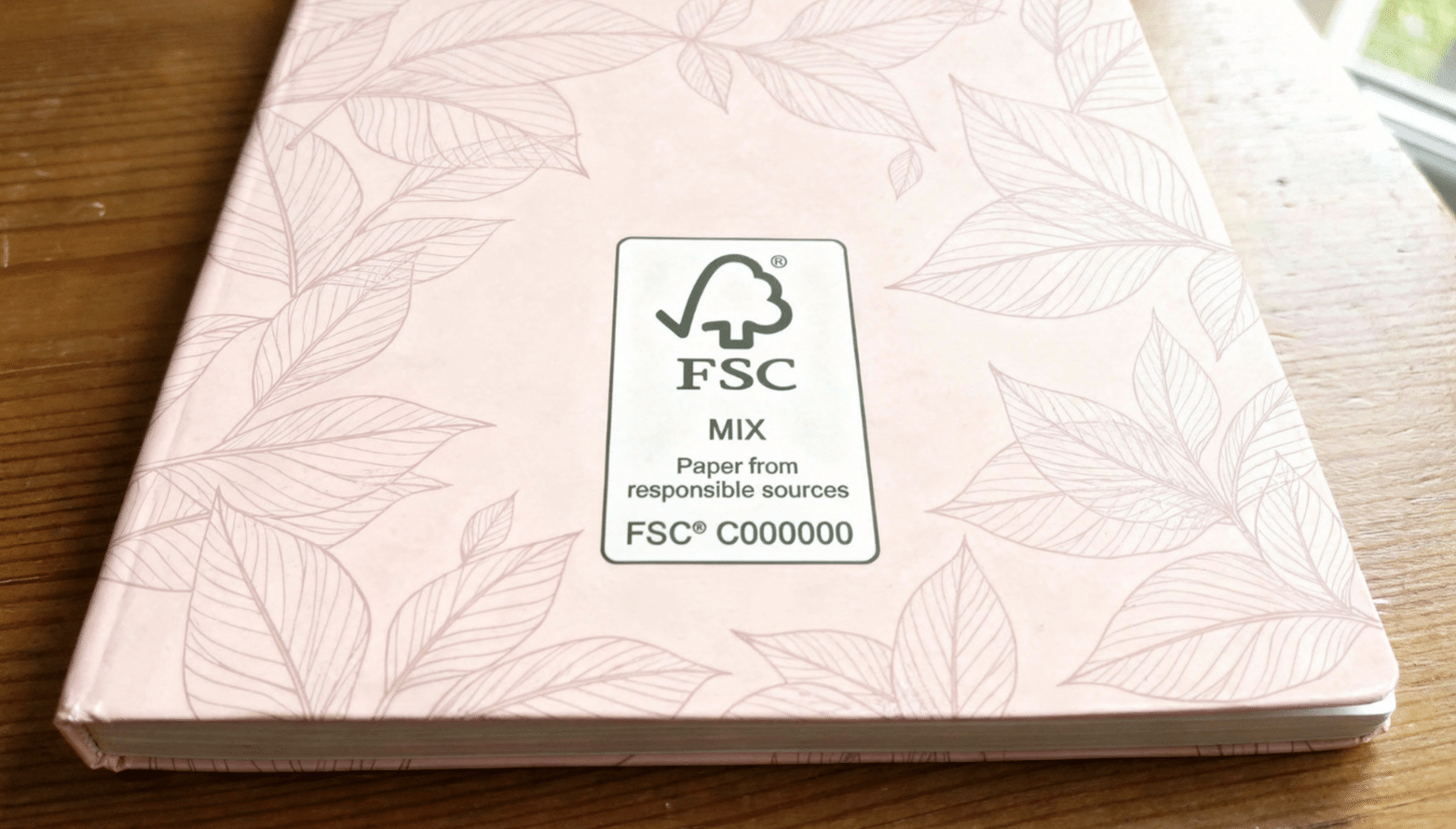
FSC Mix
This is the label you will see most often on packaging.
FSC Mix means the product contains a combination of material from FSC-certified forests, recycled material, and what FSC calls “controlled wood.”
Controlled wood is not certified, but it has been verified as not coming from illegal harvesting, high conservation value forests, genetically modified trees, or forests being converted to plantations or non-forest use.
FSC Mix is common in packaging because the board and paper supply chain draws on multiple sources. The Mix label ensures that even the non-certified portion has been checked against minimum requirements.
FSC Recycled
This label means the product is made entirely from recycled material. No new virgin fibre from forests is used.
For packaging, this applies to FSC certified products made from post-consumer recycled cardboard or paperboard.
FSC vs PEFC: how do they compare?
FSC and PEFC are the two main forest certification systems in the world. Both aim to promote responsible forest management worldwide, but they differ in structure.
FSC operates a single global standard.
Every forest seeking FSC certification is assessed against the same 10 Principles and Criteria, regardless of where it is located. PEFC, by contrast, endorses national certification schemes that are developed locally and then benchmarked against PEFC’s international requirements.
In the UK, both systems rely on the same underlying standard, the UK Woodland Assurance Standard (UKWAS). This means that many UK forests hold dual certification under both FSC and PEFC.
At Custom Pack Studio, we hold both FSC and PEFC Chain of Custody certification.
That means we can supply packaging under either label (or both) depending on what our customers or their retailers require.
If you are not sure which one you need, our team of sustainability experts can advise based on your supply chain and the requirements of the shops stocking your product.
Why FSC certification matters for packaging
If your product comes in a cardboard box, a paper sleeve, or a paperboard carton, the material in that packaging came from a tree.
Using wood and paper and other forest products responsibly means being able to prove where they came from. FSC certification is how you do that.
Consumer recognition
FSC is the most recognised forest certification label in the world. Over half of global consumers recognise the logo, and a growing number actively look for it when making purchasing decisions.
Putting the FSC label on your packaging gives customers a reason to trust your brand’s environmental claims without needing to take your word for it.
Retailer requirements
Many UK retailers now specify FSC or PEFC certified packaging as a condition of supply.
If you are selling through supermarkets, department stores, or large online retailers, your packaging certification may be part of the buyer’s checklist.
Working with an FSC-certified packaging manufacturer means you can tick that box without managing the certification yourself. It also means you are fully prepared for when your product makes it to the major retailers.
Protection against greenwashing
Advertising regulations around environmental claims are getting stricter.
Vague claims without any evidence to back them up carry reputational and legal risk.
FSC certification is specific, independently verified, and backed by a globally recognised standard. It gives you a credible claim you can make with confidence.
Supporting forests for the long term
Forests cover roughly 31% of the world’s land area.
They store carbon, conserve biodiversity, regulate water cycles, and protect soil. It is essential that we protect them from harm.
FSC certification exists to make sure that commercial use of forests does not come at the expense of the forests themselves. The wood still gets harvested and turned into paper and furniture and packaging board, but the forest stays intact for the long term.
By choosing materials from FSC-certified sources, you are helping to support the protection of forests and the wider ecosystems they sustain.
How Custom Pack Studio uses FSC certified materials
We hold FSC Chain of Custody certification, which means the board and paper we use to produce custom packaging can be traced back to certified forests through an independently audited supply chain.
When you order packaging from us, you can request FSC certified stock. We supply it with the relevant documentation, and if you want to display the FSC logo on your packaging, we guide you through the trademark requirements.
There are specific rules about logo size, placement, colour, and the inclusion of your licence number. And we can handle all of that as part of the design process to ensure your product is compliant.
For a packaging partner that cares as much about the environment as you do, choose Custom Pack Studio.
Choose packaging with a story that checks out
FSC certification is not a marketing sticker. It is a traceable, audited system that connects the box your customer holds back to a forest managed with the next generation in mind. That traceability is what separates a genuine sustainability claim from a vague one.
If you are looking for a packaging supplier that can support more sustainable packaging practices, Custom Pack Studio can help. We hold both FSC and PEFC Chain of Custody certification, and all of our packaging is 100% recyclable, helping you make more responsible choices without compromising on quality.
For more information on our processes, contact our friendly team today on 01294 314 919 or get in touch for a free quote.