



When you order custom packaging, somebody has to put your design onto the cardboard.
The two main ways of doing that are offset printing and digital printing, and the method your supplier uses will affect cost, quality, turnaround time, and what finishing options are available to you.
Most packaging companies won’t explain the difference unless you ask. We think you should understand it, because it changes what you’re paying for and what you’ll get back.
How offset printing works – by trusted packaging suppliers in Edinburgh
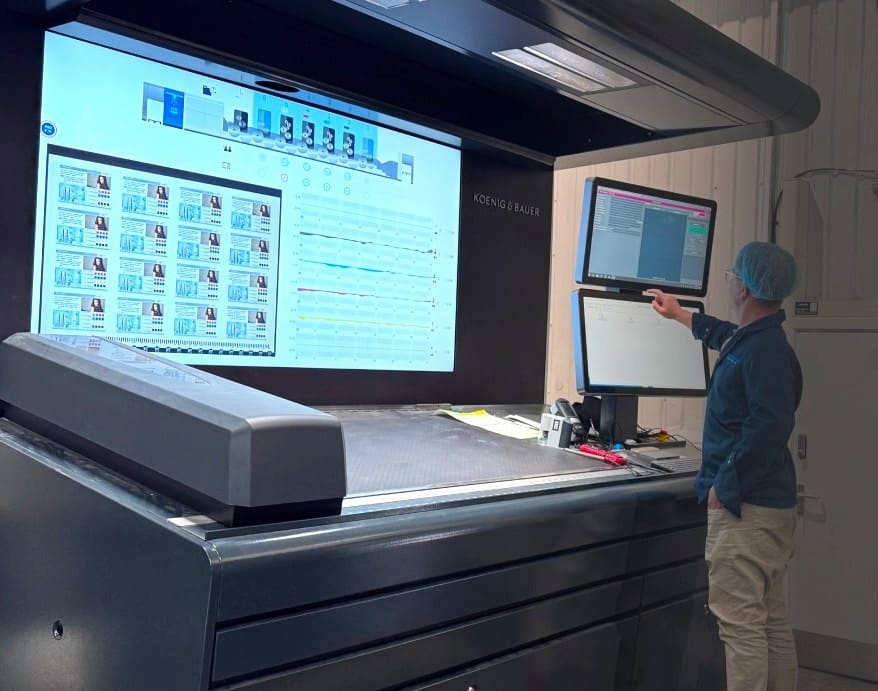
Offset printing (also called offset lithography or litho printing) has been around since the early 1900s and is still the dominant method for large-volume commercial print.
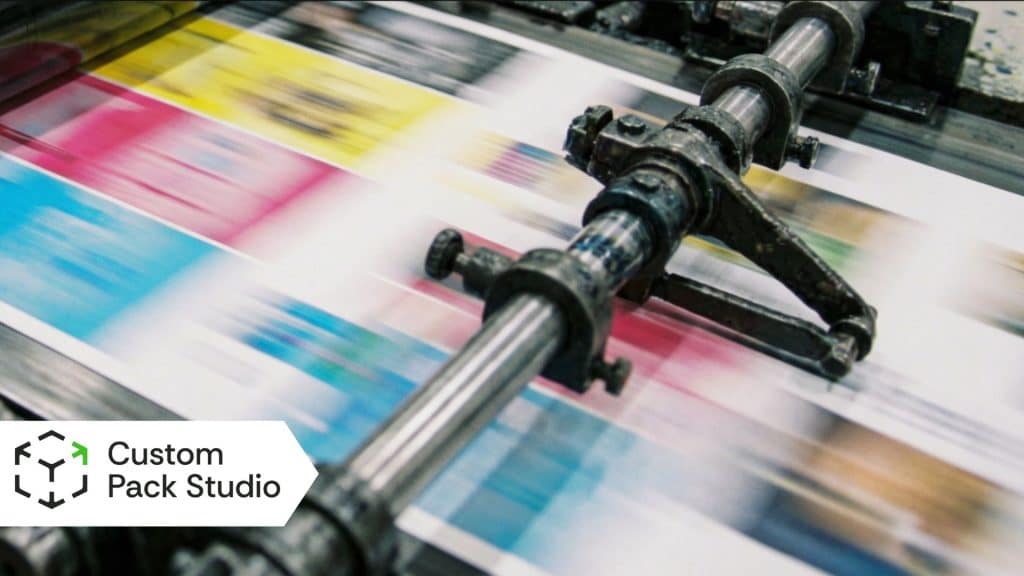
The name comes from the fact that ink doesn’t go directly onto the card. Instead, it’s transferred (offset) from a metal plate to a rubber blanket, and from the rubber blanket onto the printing surface.
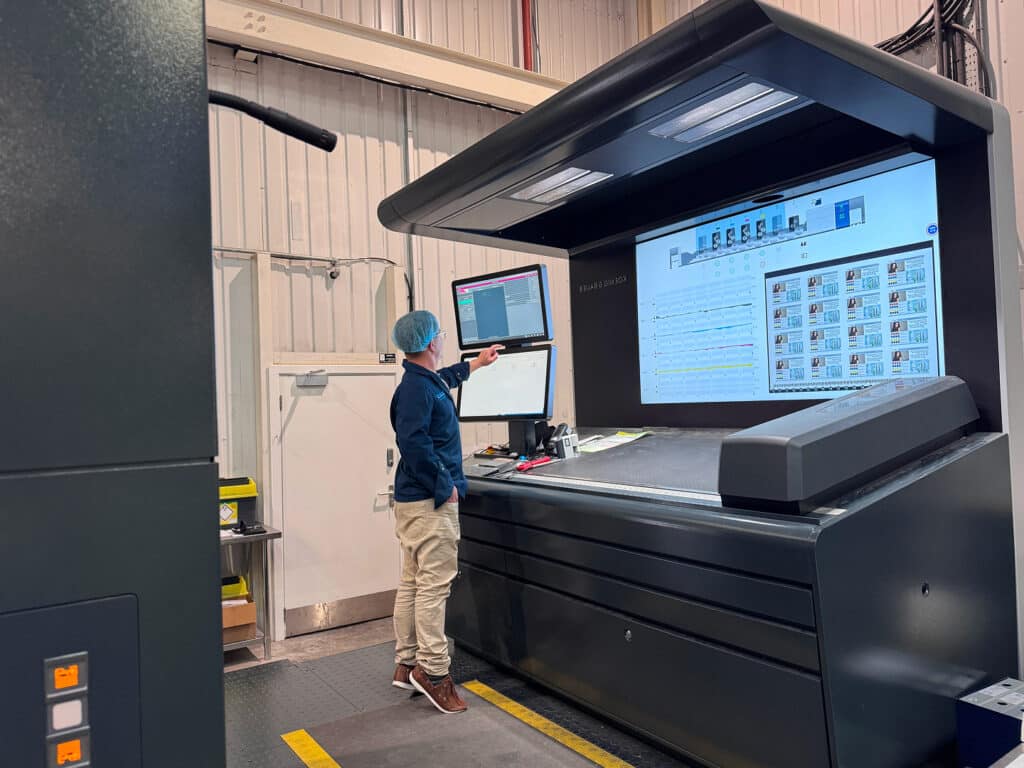
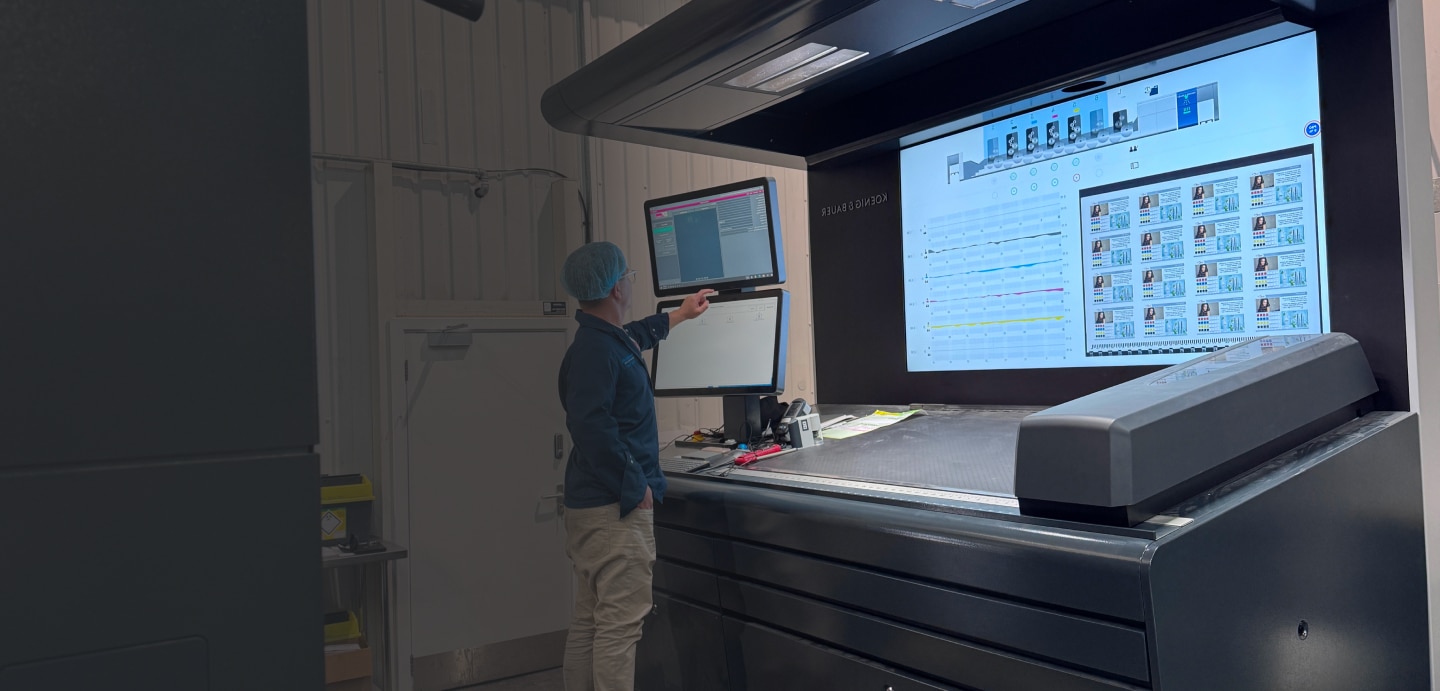
For a full-colour design, four separate plates are created: one each for cyan, magenta, yellow, and black (CMYK). These plates are mounted on a press, and each colour is applied in sequence as the sheet passes through.
The result is a clean, sharp image with consistent colour across thousands of identical sheets.
The plates are the reason offset printing has a significant setup cost.
Creating them takes time and money, which makes offset expensive for small orders but progressively cheaper as volumes increase. Once the press is running, the per-unit cost drops quickly because you’re spreading that setup cost across more boxes.
Where offset really stands out is colour accuracy.
If your brand uses specific Pantone or spot colours (and most brands do, even if they don’t realise it), offset presses can use actual Pantone inks rather than approximating them from CMYK.
That means your brand red is your brand red, not the closest available mix of cyan, magenta, yellow, and black.
How digital printing works
Digital printing skips the plate-making step entirely.
Your artwork goes from a digital file straight to the printer, which applies ink (or toner, depending on the machine) directly onto the cardboard surface.
There’s no plate setup, no colour registration to align, and no minimum run length to justify the startup cost.
Modern commercial digital presses produce quality that’s genuinely close to offset for most packaging applications.
The technology has improved dramatically over the past decade, and for most products, the average customer won’t notice a difference between a digitally printed box and an offset one.
The big advantage is flexibility.
Because there are no plates to make, you can print 50 boxes as easily as 5,000.
You can also change the design between individual units without stopping the press, which opens up personalisation, variable data printing, and A/B testing in ways that offset simply can’t match.
Where the two methods differ
The differences between offset and digital printing come down to five things: cost structure, colour quality, speed, flexibility, and material compatibility.
Each one matters differently depending on what you’re ordering.
Cost
Offset printing has a higher setup cost but a lower per-unit cost at volume. Digital printing has virtually no setup cost but a higher per-unit price that stays relatively flat regardless of quantity.
The crossover point (where offset becomes cheaper per unit than digital) typically sits around 500 to 1,000 units for standard packaging. Below that, digital is almost always more economical.
Above it, offset starts pulling ahead, and by the time you’re ordering 2,000 or more units, the per-unit saving from offset is significant.
Colour quality
Offset printing produces marginally sharper output with better colour depth, particularly on fine gradients and photographic images.
The difference is subtle and most people wouldn’t spot it on a finished box, but it’s there under close inspection.
The bigger distinction is Pantone colour capability.
Offset presses can print using actual Pantone spot colour inks, giving you exact colour matching for brand-critical elements.
Digital presses simulate Pantone colours using CMYK combinations, which gets close but isn’t identical.
If your brand guidelines specify exact Pantone references and your industry is colour-critical (cosmetics, luxury goods, food where colour equals flavour), this matters.
For most small businesses and e-commerce brands, digital colour quality is more than good enough. The gap has narrowed considerably, and unless you’re holding the digital version next to the offset version under controlled lighting, you’re unlikely to notice.
Turnaround time
Digital printing is faster. Without plates to create and approve, a digital order can go from artwork approval to finished boxes in a matter of days.
Offset typically takes longer because the plates need to be made, proofed, and approved before the print run begins.
If you’re launching a product, running a seasonal promotion, or need packaging quickly for any reason, digital gets you there sooner.
Offset is better suited to planned orders where you have a few weeks’ lead time and want to maximise cost efficiency on a larger run.
Flexibility and personalisation
This is where digital printing has a clear advantage that offset can’t match.
Because each box is printed individually from a digital file, you can change the design between units without any additional cost. That means you can print different flavour variants, limited editions, personalised names, or region-specific packaging all in the same run.
Variable data printing (where elements like names, batch codes, or QR codes change on every unit) is only possible with digital.
It’s increasingly popular for subscription boxes, gift packaging, and direct-to-consumer brands that want to create a personal connection.
Offset requires the same design across the entire print run. If you want two versions, you need two sets of plates, which doubles the setup cost.
Material compatibility
Offset printing works on a wider range of substrates. This is the industry term for whatever you’re printing on. It can even work on paper tape!
It handles coated and uncoated card, metallic boards, textured papers, and heavier stocks well.
Digital presses have improved their material range but can be more limited, particularly with very thick or textured materials.
For standard custom packaging on white or kraft card, both methods work well. If you’re using a specialist material, check with your printer which method is compatible.
What about flexographic printing?
There’s a third printing method you might encounter, particularly for corrugated boxes and shipping cartons.
Flexographic (flexo) printing uses flexible rubber or polymer plates and is the standard method for printing directly onto corrugated cardboard. It’s fast, cost-effective for very large runs, and works well for simpler designs with fewer colours.
Flexo doesn’t produce the same level of detail as offset or digital. It’s suited to bold logos, text, and simple graphics rather than photographic imagery or fine gradients.
If your shipping boxes need a printed design but don’t need the same visual quality as your product packaging, flexo is often the most practical and affordable option.
For folding cartons, presentation boxes, and anything that needs to look premium, offset or digital is the better choice.
How printing method affects finishing options
The printing method you choose can affect what finishing options are available afterwards.
Both offset and digitally printed packaging can be laminated (matte or gloss), and both support foil stamping, embossing and debossing, and spot UV.
That said, some finishing techniques work more reliably with offset printing because the ink sits differently on the surface.
Foil stamping over offset ink tends to adhere more consistently, and lamination bonds slightly better to offset-printed surfaces in some cases.
The differences are marginal with modern materials, but if you’re combining multiple finishing techniques on a premium box, it’s worth discussing with your printer.
Environmental considerations
Digital printing produces less waste overall.
There are no plates to dispose of, no chemicals used in plate-making, and because there’s no setup waste. For shorter runs, this can be great.
Offset printing uses more materials in setup but becomes more efficient at scale because the waste is a smaller percentage of the total run.
Modern offset presses have also reduced their chemical usage significantly, and vegetable-based inks are widely available.
If sustainability is a priority for your brand, the honest answer is that digital is greener for small runs, offset is greener per unit on large runs.
Looking for other eco-friendly packaging alternatives? Look into our packaging paper vs. bubble wrap guide.
How to decide which is right for your packaging
The decision usually comes down to three questions:
How many boxes do you need?
Under 500 units, digital is almost always the right call on cost and turnaround. Above 1,000 to 2,000 units, offset becomes the more economical option. In between, it depends on your specific design and material.
How critical is exact colour matching?
If your brand colours are specified as Pantone references and colour consistency across every single box matters (food, cosmetics, retail), offset gives you that certainty. If you’re flexible on slight colour variation, digital is fine.
Do you need design flexibility?
Multiple variants, personalisation, or frequent design changes all point toward digital. If you’re printing one design across a large batch, offset is more efficient.
At Custom Pack Studio, we use both methods depending on what suits the order. We’ll recommend the right one based on your quantity, design, budget, and timeline, and we’re always happy to explain why. If you’re not sure, we can produce samples using both methods so you can compare the finished result before committing to a full run.
Frequently asked questions
Can digital printing match offset quality?
For most packaging applications, yes. Modern digital presses produce quality that’s very close to offset, and the average customer won’t notice a difference on a finished box. Where offset still has an edge is on fine gradients, photographic detail, and exact Pantone colour matching.
How many boxes do I need before offset is worth it?
The breakeven point is typically around 500 to 1,000 units, depending on your design and box type. Below that, digital is usually cheaper. Above 2,000 units, offset is almost always more cost-effective.
Can you print Pantone colours with digital printing?
Digital presses simulate Pantone colours using CMYK, which gets close but isn’t an exact match. Some advanced digital presses (like the HP Indigo with extended gamut) get closer, but offset with actual Pantone inks is the only way to guarantee an exact colour match.
Which method is faster?
Digital is faster because there are no plates to make. A digital order can typically be turned around in days, while offset needs additional time for plate creation and proofing.
Is one method more sustainable than the other?
Digital produces less waste on small runs because there are no plates or setup sheets. Offset becomes more efficient per unit on large runs. The difference is relatively small compared to other sustainability factors like material choice and recyclability.
Ready to get started?
Whether you need 50 boxes or 5,000, Custom Pack is here for you.
We match you with the right printing method for your packaging design and budget. There’s no minimum order and we include design support if you need it.
Get a free quote or call us on 01294 314 919 to discuss your project.