


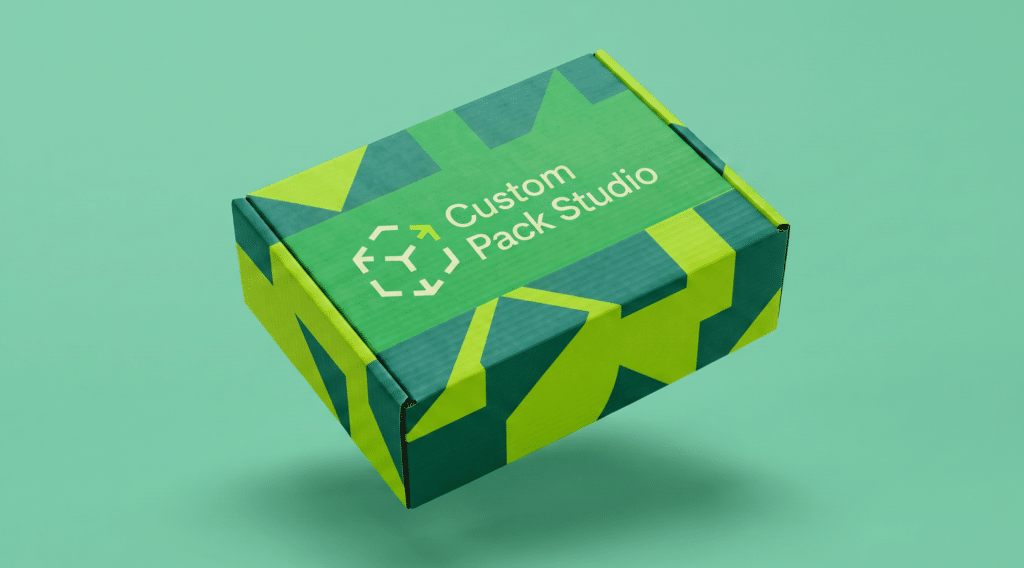
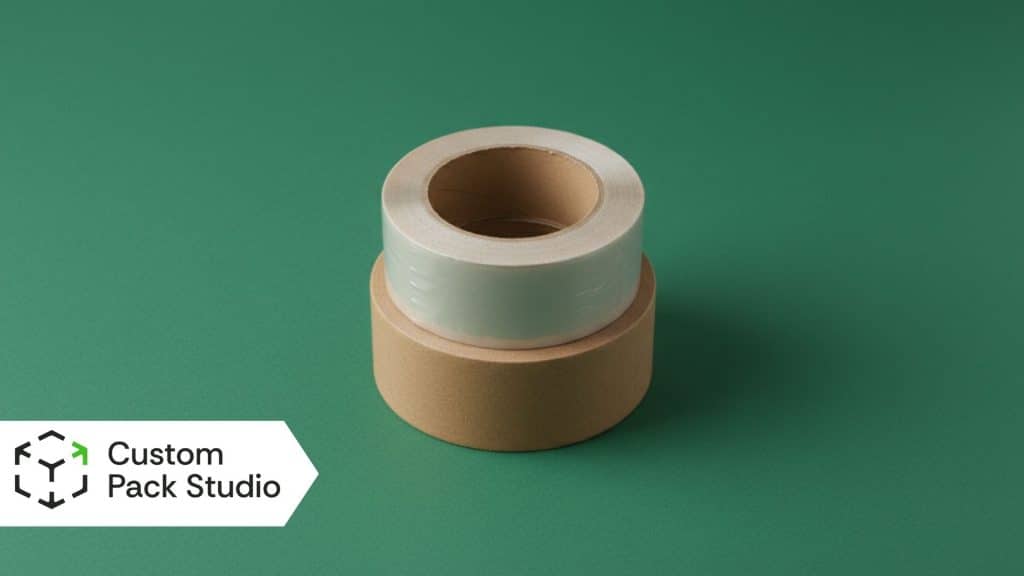
The tape on your boxes isn’t the most glamorous part of your packaging, but it makes a bigger impression than you’d think. Customers notice.
A neatly sealed box with branded kraft tape says something different from a box wrapped in shiny plastic tape, and the practical differences between the two go beyond appearances.
Paper tape and plastic tape both seal boxes.
They do it differently. They cost different amounts. And one of them can be recycled with the box while the other can’t.
Here’s what matters when you’re choosing between them.
What is paper tape? – by trusted packaging suppliers in Edinburgh
Paper tape is a packing tape made from paper. It is typically kraft paper, with either a water-activated adhesive or a self-adhesive backing.
The water-activated version is the traditional type: you wet the adhesive side and it bonds permanently to the cardboard surface as it dries.
The self-adhesive version works like regular tape and sticks on contact.
What makes paper tape different from plastic tape is how it bonds.
Water-activated paper tape doesn’t just stick to the surface of the cardboard. It penetrates the fibres and forms a bond that becomes part of the box itself.
Pulling it off tears the cardboard, which means it can’t be opened and resealed without obvious damage. That’s why it’s sometimes called tamper-evident tape.
Paper tape is typically brown (natural kraft) or white, but it can be custom printed with your logo, brand name, or messaging.
Printed paper tape is increasingly popular among e-commerce brands because it turns the outer box into a branded touchpoint without needing a fully printed box.
What is plastic tape?
Plastic packing tape (usually polypropylene or PVC) is the clear or brown shiny tape you see on most parcels and shipping boxes. It’s the standard in warehouse environments because it’s cheap, easy to apply with a hand dispenser, and available everywhere.
Polypropylene tape is the most common type.
It’s lightweight, stretches slightly, and resists moisture well.
PVC tape is a step up in quality: it’s thicker, quieter to unroll, and tears more cleanly by hand.
Both types use a pressure-sensitive adhesive that sticks on contact and can be applied quickly without water or heat.
Plastic tape sits on the surface of the cardboard rather than bonding with it. That’s why it peels off relatively cleanly, which is useful if you want to reuse boxes but a disadvantage if tamper resistance matters.
How do they compare?
Strength and bond quality
Water-activated paper tape forms a stronger bond with cardboard than plastic tape.
Once it dries, a single strip of paper tape is enough to securely seal a box, because the adhesive actually bonds with the cardboard fibres.
With plastic tape, packers typically use multiple strips (an H-pattern or cross-strips) to achieve the same level of security, because the tape only adheres to the surface.
Reinforced paper tape (which contains fiberglass threads running through the paper) is even stronger. It’s used for heavy or valuable shipments where the seal needs to withstand rough handling, and a single strip provides enough tensile strength to secure boxes weighing 30kg or more.
Standard polypropylene tape is adequate for most lightweight to medium shipments but can fail on heavy boxes, particularly in cold or dusty warehouse conditions where the adhesive doesn’t bond well.
Tamper evidence
Paper tape can’t be removed and reapplied without leaving obvious damage. The bond with the cardboard means any attempt to open the box tears the tape and the surface of the box beneath it.
For businesses shipping valuable products, this is a meaningful security feature.
Plastic tape can be peeled off and reapplied without obvious signs of tampering, which makes it less secure for high-value shipments.
Some businesses address this with tamper-evident plastic tape, but standard rolls offer no such protection.
Recyclability and environment
This is where paper tape has a clear advantage.
Paper tape can be recycled along with the cardboard box. There’s no need for the customer to peel it off before putting the box in the recycling bin, because both materials are processed together in the paper recycling stream.
Plastic tape must be removed from the box before recycling, and the tape itself is not recyclable through standard household recycling.
In practice, most people don’t bother removing it, which can contaminate cardboard recycling loads.
If eco-friendly packaging is part of your brand message, you can also consider packaging paper instead of bubble wrap for item security.
Cost
Plastic tape is cheaper per roll.
A standard roll of polypropylene tape costs significantly less than a roll of water-activated paper tape, and for businesses sealing thousands of boxes per week, that difference adds up.
However, the cost comparison isn’t as simple as price per roll. Because paper tape bonds more effectively, you typically need less of it per box (one strip versus two or three strips of plastic tape).
You also avoid the cost of a dispenser gun for plastic tape if you use self-adhesive paper tape that tears by hand. When you factor in tape usage per box rather than price per roll, the gap narrows.
Custom-printed paper tape costs more than plain tape, but it can replace the need for branded stickers, labels, or outer packaging, which offsets some of that cost. A plain kraft box sealed with printed paper tape creates a branded appearance without the expense of a fully custom-printed box.
Branding potential
Paper tape is the better canvas for branding.
Custom-printed kraft tape with your logo, website, or a short message turns every parcel into a branded package. The natural kraft surface takes print well, and because paper tape lies flat against the box surface, the printing looks clean and intentional.
Plastic tape can also be custom printed, but the shiny, transparent surface doesn’t have the same aesthetic appeal.
Printed plastic tape tends to look utilitarian rather than premium, and the printing can be harder to read on a clear background.
For brands that want their packaging to feel considered and cohesive, printed paper tape is one of the easiest and most cost-effective ways to achieve it, especially when paired with a plain kraft mailer box and custom packaging elements inside.
Custom Pack Studio is here to advise you on all things packaging. From foil stamping to embossing to which size to go for, we are the team for you.
Application and ease of use
Self-adhesive paper tape is just as easy to use as plastic tape. You pull it, tear it by hand, and stick it down. No special equipment needed.
Water-activated paper tape requires a dispenser that wets the adhesive as the tape is pulled through. The extra step adds a few seconds per box, which matters at scale but is negligible for businesses packing under 50 orders per day.
Plastic tape is the most straightforward to use. A handheld tape gun applies it quickly and cleanly, and most warehouse workers are already familiar with the process.
Moisture resistance
Plastic tape handles moisture better than paper tape.
If your boxes are stored or shipped in damp conditions, polypropylene tape maintains its adhesive strength where paper tape can soften or fail.
Water-activated paper tape is somewhat better than self-adhesive paper tape in damp conditions (because the water-activated bond is stronger once set), but neither type matches plastic tape for wet-environment performance.
If your products are shipped internationally, stored outdoors, or delivered in conditions where moisture is a factor, plastic tape or reinforced water-activated paper tape are the safer choices.
Which should you use?
Choose paper tape if sustainability matters to your brand, you want your packaging to look premium and considered, tamper evidence is a concern, or you’re looking for a simple way to add branding to plain boxes.
Paper tape is increasingly the default for direct-to-consumer and e-commerce brands that want their packaging to reflect their values.
Choose plastic tape if you’re sealing high volumes at speed and cost per roll matters, your products ship in damp or cold conditions, or you need the tape to work on non-cardboard surfaces (poly mailers, plastic containers).
Plastic tape remains the practical choice for warehouse and logistics operations where speed and cost are the priorities.
Or consider both.
Some businesses use branded paper tape on customer-facing parcels and plain plastic tape on wholesale or B2B shipments where branding matters less. There’s no rule saying you have to pick one.
Frequently asked questions
Can you recycle paper tape with the box?
Yes. Paper tape is made from the same material family as cardboard and can be recycled together. Plastic tape should be removed before recycling, though in practice many recycling facilities can process small amounts of plastic tape contamination.
Is paper tape strong enough for heavy boxes?
Standard paper tape handles most e-commerce and retail shipments well. For heavy boxes (over 15 to 20kg), reinforced paper tape with fiberglass threads provides additional tensile strength and outperforms standard plastic tape.
Can you print your logo on paper tape?
Yes. Custom-printed paper tape is one of the most popular branding options for e-commerce businesses. It’s a cost-effective way to add branding to plain boxes without ordering fully custom-printed packaging.
Does paper tape work in cold warehouses?
Water-activated paper tape bonds well in most temperatures because the adhesive is activated by moisture rather than pressure. Self-adhesive paper tape can lose tack in very cold conditions, similar to plastic tape. For cold environments, water-activated tape is the more reliable option.
Is paper tape more expensive than plastic tape?
Per roll, yes. But because paper tape bonds more strongly, you typically need fewer strips per box. When you calculate cost per box sealed rather than cost per roll, the difference is smaller than the sticker price suggests.
Ready to enhance your products with custom packaging?
If you are looking for ways to enhance your brand or products, Custom Pack Studio is here for you.
We can help give your packaging a complete refresh to make a lasting impact on your customers.
Simply contact our team today to get a free quote on 01294 314 919.