










When you order cardboard boxes for your products, you’ll be asked whether you want single wall or double wall.
If you’ve never thought about what’s inside cardboard. The question might catch you off guard.
But the answer matters
It determines how much weight your box can handle, how well it protects what’s inside, and how much you’ll pay per unit.
What’s inside corrugated cardboard? – by Glasgow packaging supplier professionals
Corrugated cardboard isn’t a single sheet of card.
It’s a sandwich of flat paper layers (called liners) and wavy, ridged paper layers (called fluting or flutes).
The fluting gives the board its strength by creating air pockets between the flat layers, which act as cushioning and provide structural rigidity.
The difference between single wall and double wall is simply how many layers of fluting the board contains.
More fluting means more strength, more weight capacity, and more cost.
Single wall cardboard
Single wall corrugated board has three layers: an outer liner, one layer of fluting, and an inner liner.
It’s the most common type of corrugated cardboard and the one you encounter most often in everyday packaging, from e-commerce deliveries to retail boxes.
The fluting comes in different profiles (sizes of the ridges), and the profile affects the board’s properties:
E-flute
The thinnest, at about 1.5mm.
It’s smooth enough for high-quality printing directly onto the board and is commonly used for mailer boxes, retail packaging, and smaller product boxes.
It’s strong enough for lightweight products but doesn’t offer much crush resistance.
B-flute
It is around 3mm thick.
It’s the standard for most single wall shipping boxes because it balances printability with reasonable strength.
Good for products up to about 10 to 15kg.
C-flute
The thickest single-wall option at about 4mm.
It provides better crush resistance and cushioning than B-flute and is used for shipping heavier products or items that need more protection.
Weight capacity is roughly 15 to 20kg depending on the box dimensions.
Single wall boxes are lighter, cheaper, and easier to handle than double wall.
They take up less storage space when flat-packed and are sufficient for the majority of e-commerce and retail packaging applications where the contents weigh under 15kg.
Double wall cardboard
Double wall corrugated board has five layers: an outer liner, a layer of fluting, a middle liner, a second layer of fluting, and an inner liner.
The two layers of fluting make the board significantly thicker, stronger, and more resistant to crushing and puncture.
The most common double wall combination is BC-flute (one layer of B-flute and one layer of C-flute).
This gives a board thickness of about 7mm. The combination provides good cushioning from the C-flute layer and a smoother printing surface from the B-flute layer.
Double wall boxes handle heavier loads.
A well-constructed double wall box can support 25 to 35kg or more depending on dimensions, and it stacks much better than single wall because the thicker board resists the compression from boxes stacked on top.
If you’re palletising products for warehouse storage or freight shipping, this stacking strength makes a real difference.
The extra layer also means better protection against puncture.
Sharp or dense objects inside the box are less likely to poke through double wall board, and external impacts (dropped boxes, forklift damage, rough courier handling) are absorbed more effectively by the additional fluting layer.
How do they compare?
Strength and weight capacity
Single wall handles products up to about 15 to 20kg comfortably, depending on the flute profile and box size.
Double wall supports 25 to 35kg and beyond.
If your product weighs over 15kg, double wall is the safer choice because single wall boxes under heavy loads can buckle at the corners and lose their shape during stacking.
For very heavy items (over 35kg), triple wall corrugated exists as a third option.
It’s used for industrial shipping and extremely heavy products, but it’s rarely needed for standard commercial packaging.
Protection
Double wall provides better cushioning and impact absorption because the two layers of fluting create more air pockets.
For fragile items like glassware, ceramics, electronics, or anything that would suffer from a rough drop, the extra layer of protection matters.
Single wall protects adequately for robust products (clothing, books, packaged food, sturdy consumer goods) but offers less margin of safety for breakables.
Cost
Single wall boxes cost less per unit because they use less material.
The difference varies with box size, but as a rough guide, double wall boxes cost 30 to 60 percent more than equivalent single wall boxes. For businesses ordering thousands of boxes, that cost difference is significant.
However, the cheapest box isn’t always the cheapest option overall.
If your product arrives damaged because the box wasn’t strong enough, the cost of replacements, returns, and lost customer trust far exceeds the saving on packaging.
Choosing the right wall thickness for your product is a cost-avoidance decision as much as a cost-reduction one.
Weight and shipping cost
Single wall boxes are lighter, which means lower shipping costs when weight is a pricing factor.
Double wall boxes weigh more and take up slightly more space (the thicker board increases the outer dimensions marginally).
For businesses shipping high volumes via couriers where weight-based pricing applies, single wall keeps costs down.
For pallet freight where you’re paying per pallet rather than per kg, the weight difference is less relevant, and the stacking strength of double wall means you can load pallets higher without the bottom boxes collapsing.
Storage
Both types store flat, but single wall boxes take up less space per unit when flat-packed because the board is thinner.
If your packing area is tight, single wall boxes are more space-efficient.
Double wall flat-packs are noticeably thicker and a pallet of flat-packed double wall boxes holds fewer units than the same pallet of single wall.
Printability
Single wall boxes with E-flute or B-flute have a smoother surface that takes print well. This makes them great for branded custom packaging with detailed graphics, as well as soft touch and matte lamination.
Thicker flutes (C-flute single wall and double wall) have a more ridged surface that can show washboard effect (a slight rippled pattern in printed areas), though modern printing techniques have minimised this.
If your box needs to look premium with high-quality printed graphics, single wall E-flute or B-flute will give you the cleanest result.
Double wall is better suited for functional shipping boxes where print quality is less of a priority, or for boxes where a separate printed label or sleeve provides the branding.
Which products need which box?
Single wall is right for
E-commerce orders under 15kg: clothing, accessories, books, packaged food, cosmetics, candles, and most consumer products shipped via Royal Mail or standard couriers. Single wall provides enough protection for the journey and keeps packaging costs and weight down.
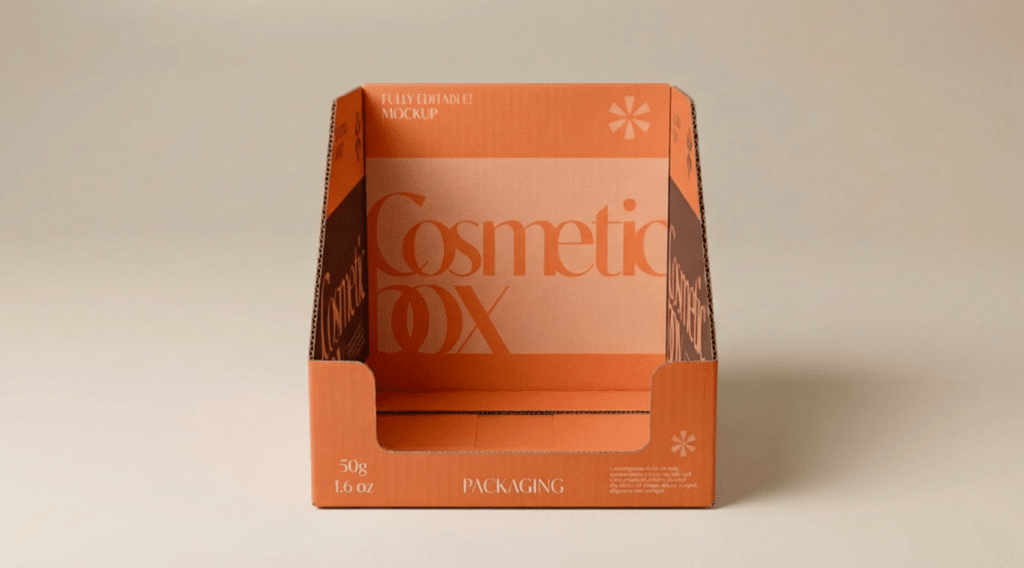
Retail and display packaging: boxes that sit on shelves or counters, where appearance matters more than heavy-duty protection. E-flute and B-flute single wall take print beautifully and create a polished presentation.
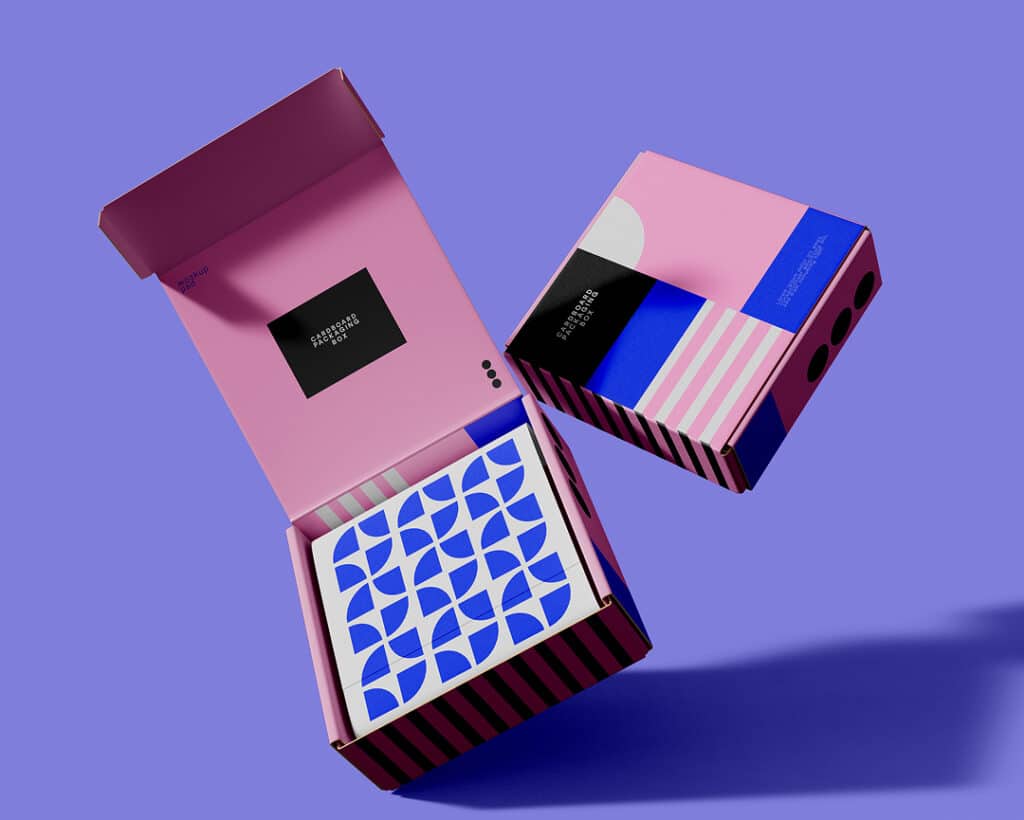
Subscription boxes and mailer-style packaging: where the box opens as part of the unboxing experience and needs to be lightweight for postal rates. It also works great with matte vs lamination finishes.

Double wall is right for
Heavy products (15 to 35kg): equipment, tools, appliances, bulk food products, and anything where the box needs to support significant weight without distorting.
Fragile items: glassware, ceramics, electronics, mirrors, and anything where impact damage is a real risk during shipping and handling. The extra fluting layer provides meaningful additional cushioning.
Stacked storage and palletised shipping: if your boxes are going to be stacked in a warehouse or on pallets, double wall’s crush resistance prevents the bottom boxes from collapsing under the weight of the stack above.
Long-term storage: double wall holds its shape better over time. If products sit in boxes for weeks or months in a warehouse, single wall can sag or warp, particularly in humid conditions. Double wall stays rigid.
What about triple wall?
Triple wall corrugated has three layers of fluting and is used for extremely heavy or industrial applications (over 35kg).
It’s essentially a wooden crate alternative for products like machinery parts, heavy electronics, and industrial equipment.
Most businesses won’t need it.
But it’s worth knowing it exists if you’re packaging genuinely heavy products.
Frequently asked questions
How do I know which wall type my current boxes are?
Cut through the edge of your box and look at the cross-section. If you see one wavy layer between two flat layers, it’s single wall. If you see two wavy layers separated by a flat layer in the middle, it’s double wall. You can also feel the thickness: single wall is roughly 2 to 4mm thick, double wall is 6 to 8mm.
Can I print on double wall cardboard?
Yes, though print quality on double wall can show slight washboard effect (a rippled pattern) because the thicker fluting creates an uneven surface. For detailed branded graphics, single wall with E-flute or B-flute gives a cleaner result. For simple logos and text, double wall prints fine.
Is double wall more expensive?
Yes, typically 30 to 60 percent more than single wall for the same box dimensions. The extra material and manufacturing step add cost. For lightweight products, the extra expense isn’t justified. For heavy or fragile products, it often saves money overall by reducing damage and returns.
What weight can single wall cardboard hold?
Single wall boxes comfortably handle 10 to 20kg depending on the flute profile and box dimensions. E-flute handles up to about 10kg, B-flute about 15kg, and C-flute about 20kg. These are rough guides; actual capacity depends on the specific board grade and box design.
Do both types recycle the same way?
Yes. Both single wall and double wall corrugated cardboard are widely recycled through standard UK household and commercial recycling streams. Corrugated cardboard is one of the most recycled packaging materials, with recovery rates above 80 percent in the UK.
Need help choosing?
If you’re not sure whether single wall or double wall is right for your product? Custom Pack Studio is here to help recommend the best option for you business.
We produce custom boxes in both wall types, in any size, with absolutely no minimum order. Our design team is always on hand to advise on the right board grade for your product’s weight, fragility, and shipping needs.
Get a free quote or call us on 01294 314 919.